JMI’s Sarojini Naidu Centre for Women’s Studies and Sahitya Akademi organise Symposium on ‘Gendered Epistemologies’

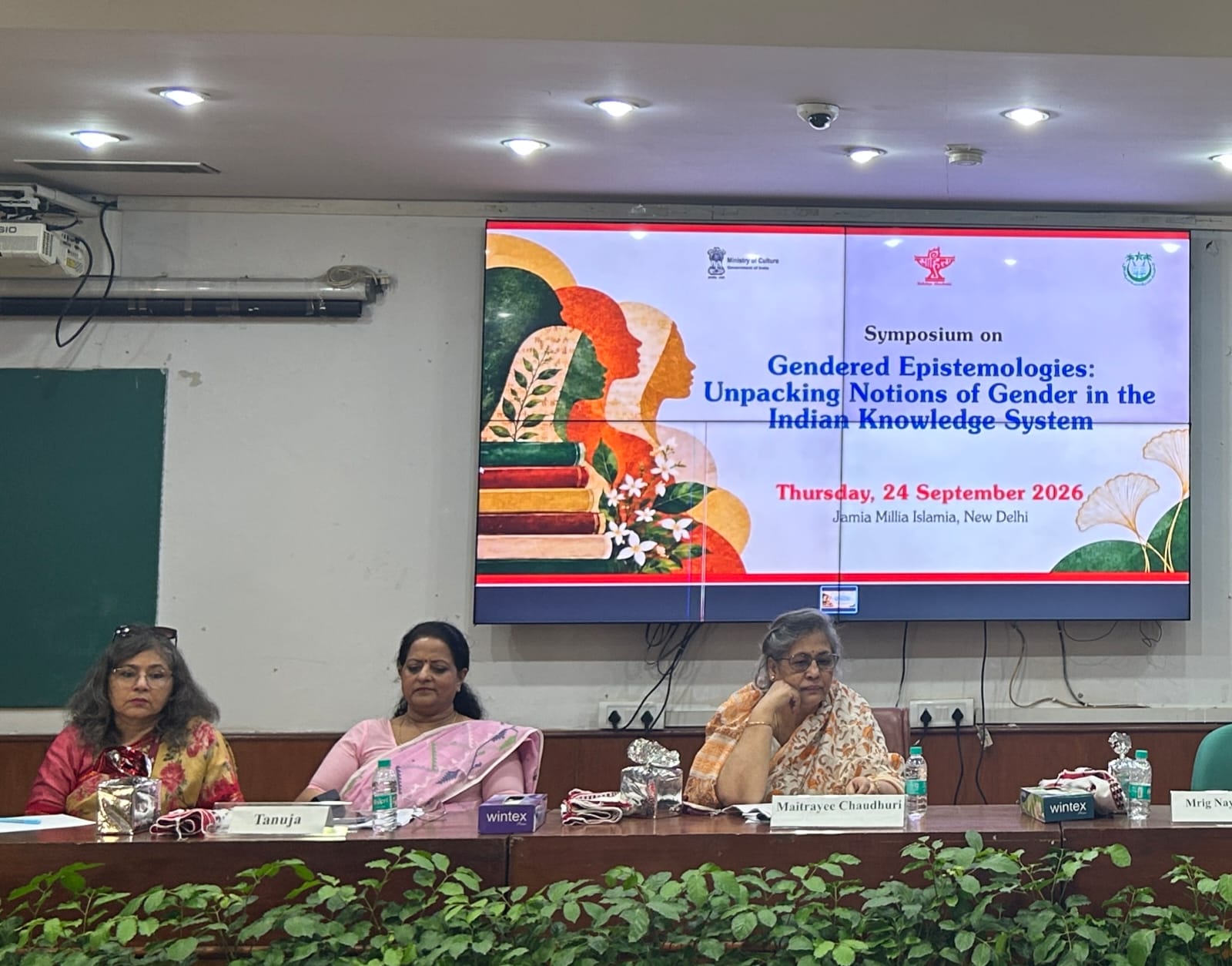
The Sarojini Naidu Centre for Women’s Studies (SNCWS), Jamia Millia Islamia (JMI), in collaboration with the Sahitya Akademi, organised a one-day symposium on “Gendered Epistemologies: Unpacking the Indian Knowledge System” on 24 September 2026 at the FTK Auditorium, Centenary Gate No. 13, JMI.
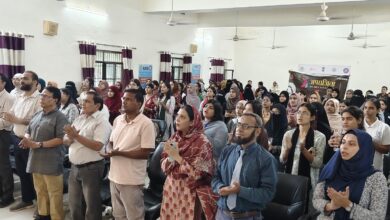
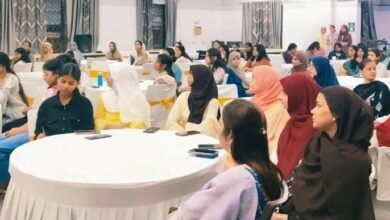
The symposium, organised under the leadership of Prof. Vijaylakshmi Brara, Director, SNCWS, and convened by Dr. Aparna Dixit, brought together more than 140 participants, including eminent speakers, academics, researchers, students, and participants from within and outside the university.
The programme comprised an inaugural session, two working sessions, and a valedictory session, with eight speakers addressing different dimensions of gender, knowledge production, and the Indian Knowledge System.
The inaugural session began with a formal welcome address by Ms. Mrig Nayani Gupta, Programme Officer, Sahitya Akademi. She highlighted how crucial it is to document what remains undocumented. Delivering the inaugural address, Prof. Tanuja, Dean, Academic Affairs and Director, Centre for the Study of Social Inclusion, JMI, reflected on the concepts of Gyan, Praana, and wisdom. She emphasised the need to move beyond binaries such as male and female, and modern and ancient, while engaging with the Indian Knowledge System.
The keynote address was delivered by eminent sociologist Prof. Maitrayee Chaudhuri, who critically examined the importance of approaching knowledge through references. She emphasised that understanding how knowledge is produced and constructed is central to any engagement with the Indian Knowledge System.
Chairing the inaugural session, Prof. Vijaylakshmi Brara highlighted the importance of organising such academic engagements within the framework of the National Education Policy (NEP), 2020. She described the symposium as a timely intervention in the field of gender studies and knowledge production.
The first working session, titled “Lived Experiences,” was chaired by Prof. Arvinder A. Ansari, Senior Professor, Department of Sociology, JMI. Prof. Rekha Shangpliang, North-Eastern Hill University and Prof. Gomti Bodra Hembrom, Department of Sociology, JMI, presented papers on the lived experiences of the Khasi and Baiga communities, respectively. The session examined the Indian Knowledge System through case-based studies, highlighting the relationship between knowledge, community life, cultural practices, and everyday experiences.
The second working session, titled “Understanding the Indian Knowledge System,” was chaired by Prof. Preeti Sharma, Head, Department of History, JMI. Prof. Sudha Singh, Head, Department of Hindi, University of Delhi, spoke about the invisibility of women in literature and underlined the experiential nature of women’s knowledge and language.
Prof. Rajnish Kumar Mishra, Professor, Centre for Sanskrit and Indic Studies, Jawaharlal Nehru University, drew upon classical Sanskrit texts to emphasise the importance of engaging with ancient texts as foundational points of reference for understanding the Indian Knowledge System.
Dr. Anjali Capila, formerly Associate Professor of Development Communication at Lady Irwin College, University of Delhi, presented a paper on women’s folklore, with particular reference to the lives and challenges of women in Garhwal.
The valedictory address was delivered by Prof. Jitendra Kumar Srivastava, Registrar, Indira Gandhi National Open University (IGNOU), New Delhi. Referring to a range of literary texts, he stressed the importance of reading the works of Indian women writers and poets to understand the processes through which women have created, articulated, and transmitted knowledge.
The valedictory session was chaired by Prof. Zuber Menai, Dean, Faculty of Social Sciences, JMI. In his remarks, he highlighted the significance of organising academic events that promote critical reflection and interdisciplinary engagement with the Indian Knowledge System.
The symposium concluded with a detailed report presented by Dr. Aparna Dixit, Convener of the symposium, followed by a formal vote of thanks by her.