Dr. Rupamanjari Hegde Delivers Lecture on ‘Classrooms, Curriculum and Citizenship’

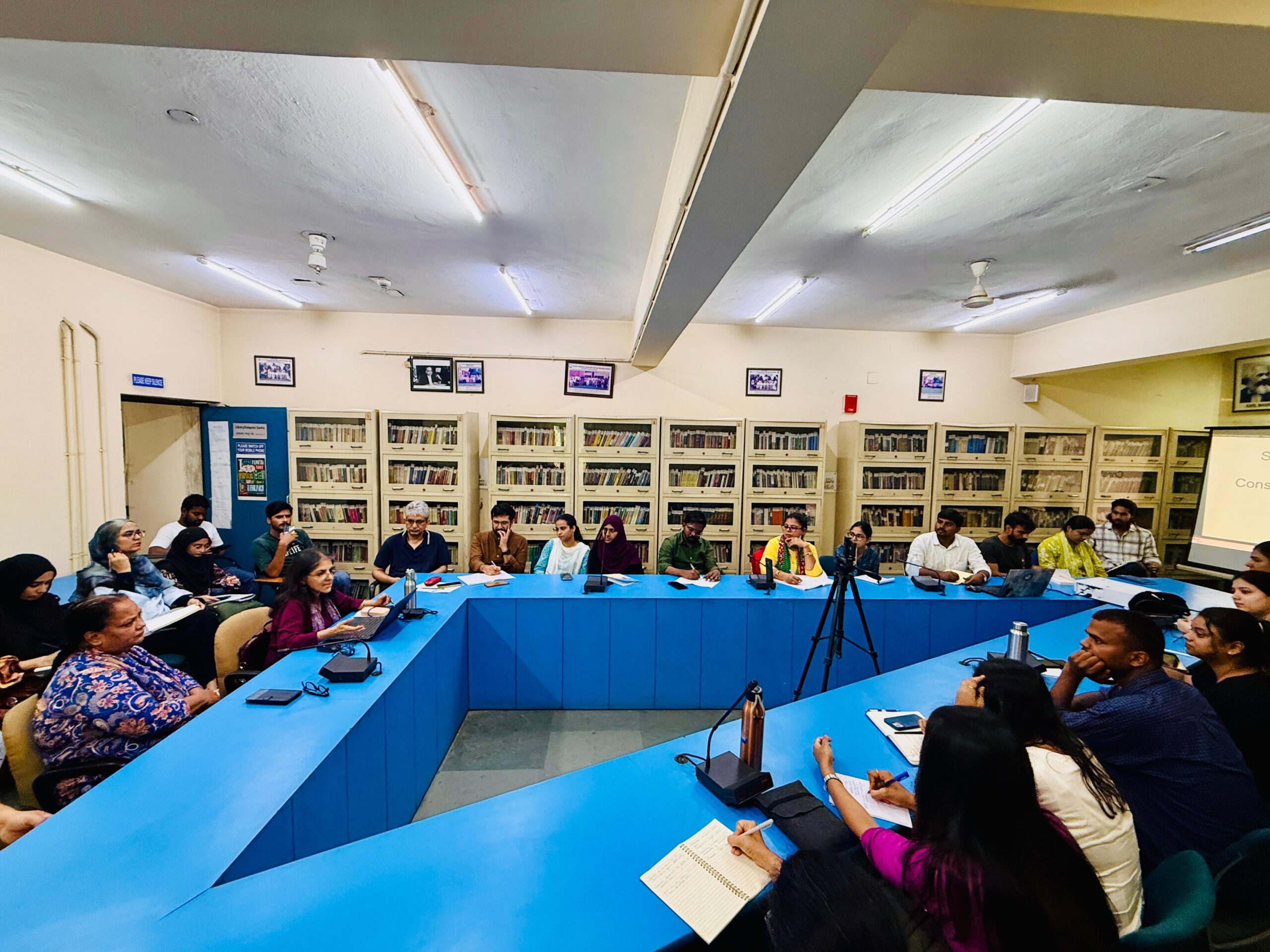
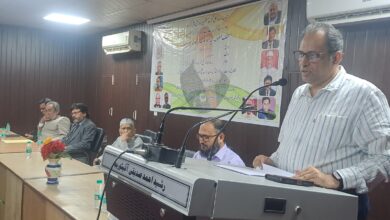
TNN News : The Dr. K. R. Narayanan Centre for Dalit and Minorities Studies, Jamia Millia Islamia, yesterday hosted a lecture by Dr. Rupamanjari Hegde from the School of Education, Azim Premji University, Bengaluru. The talk, titled “Schooling, Textbooks and Constructions of Citizenships”, was organised as part of the Dr. B. R. Ambedkar Memorial Lecture Series.
The lecture was chaired by Professor Halima Sadia Rizvi, Director of the Dr. K. R. Narayanan Centre for Dalit and Minorities Studies. Professor Padmanabh Samarendra, the programme coordinator, delivered the opening remarks and introduced the speaker to the audience, highlighting her contribution to the field of education and curriculum studies.
Drawing from her research, Dr. Hegde explored how textbooks and classroom processes have historically contributed to shaping the idea of citizenship in India. Her presentation traced the evolution of school textbooks from the colonial period through the post-independence decades, focusing on content and pedagogical shifts up to the early 2000s.
She began by examining the foundations of mass education under colonial rule. A central example discussed was The Citizen of India by William Lee-Warner, a text introduced to instill civic values in Indian students. Dr. Hegde explained that such texts were not neutral. They aimed to cultivate certain ideals of citizenship defined by colonial power, including loyalty, discipline, and social conformity. This, she noted, was part of a larger strategy to govern through education.
The talk then moved into the post-independence period, where Dr. Hegde analysed the development of curriculum design through national agencies like the National Council of Educational Research and Training (NCERT). She showed how early NCERT textbooks aimed to promote a shared sense of civic understanding. Over time, she noted, there were efforts within curriculum development to gradually reflect the social and cultural diversity of Indian society. Her research draws attention to shifts that culminated in the National Curriculum Framework (2005), which provided a more reflective basis for textbook writing.
A key part of her talk addressed how textbooks, despite revisions over the decades, continue to reflect dominant social perspectives. Dr. Hegde highlighted that while content may evolve, the everyday interpretation of that content depends heavily on the teacher. Teachers are not passive transmitters of information. They bring their own lived experiences, social positions, and biases into the classroom. As a result, the same text may be presented in very different ways, depending on the teacher’s outlook and methods.
Throughout the lecture, Dr. Hegde emphasised that textbooks are more than educational tools. They are vehicles through which values, social norms, and collective imagination are communicated. Her research urges a closer look at what textbooks say, how they are taught, and how they are received by students. She invited the audience to think of textbooks as political and cultural texts that help shape the moral and civic imagination of young minds.
In her concluding remarks, Professor Halima Sadia Rizvi observed that the lecture opened up important questions about the silent curriculum that textbooks carry, and the critical need to reflect on how knowledge is framed and delivered in everyday schooling.
The session ended with an engaging discussion. The lecture was part of the Centre’s broader effort to host interdisciplinary scholars whose work sheds light on how structures of knowledge impact marginalised lives.